
Train First Responders
Your Lived Experience is Their Best Lesson.
The Mission: Why We Need You
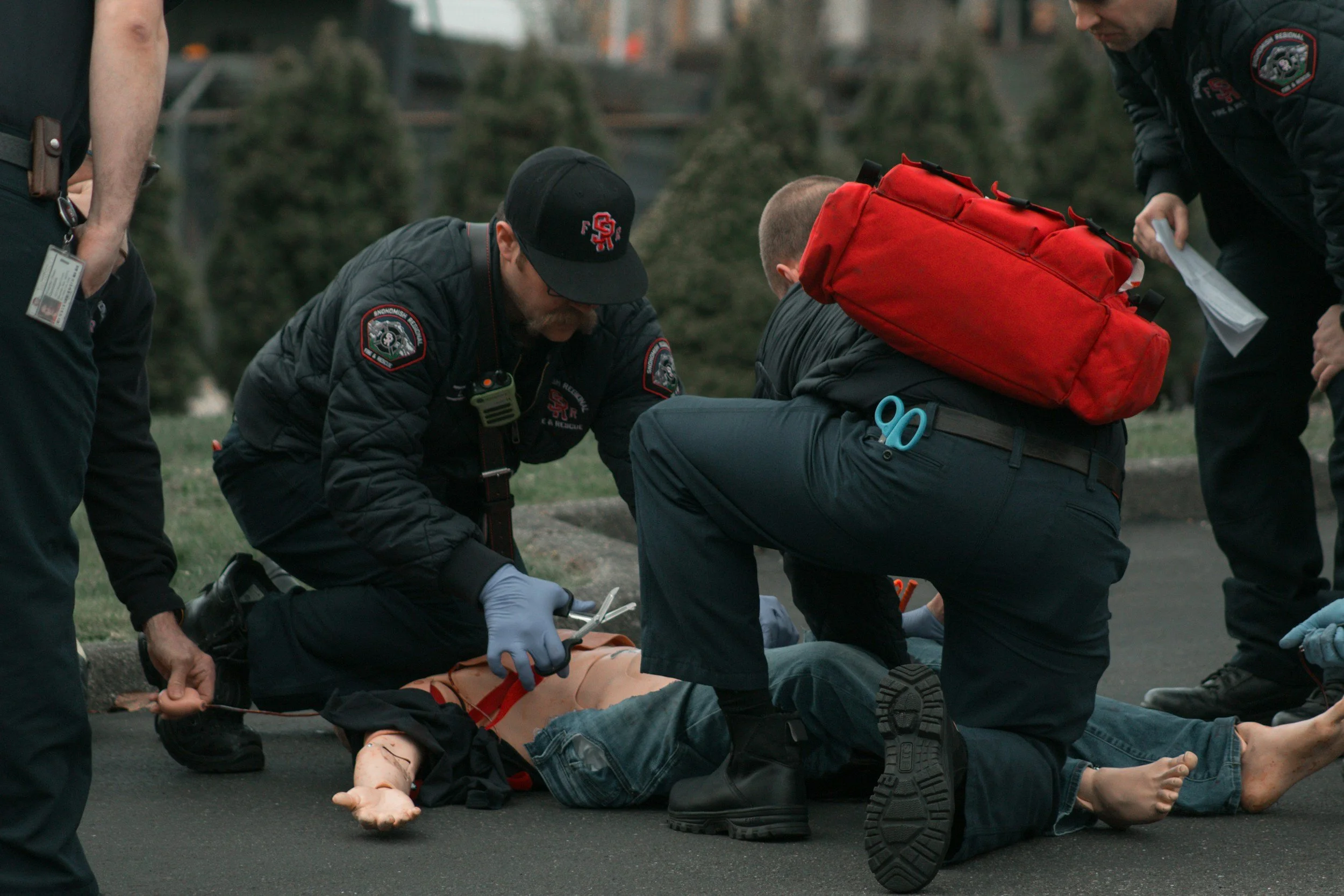
First responders, paramedics, and military medics train constantly to save lives. But too often, they train on plastic mannequins that don't bleed, don't scream, and don't look like us.
Plastic doesn't prepare you for reality.
When a responder sees a limb difference or a severe injury for the first time in a real crisis, they often experience "tunnel vision" or the "freeze response." We can cure that.
By volunteering as a Standardized Patient or Role-Player, you use your unique physiology to provide "Visual Inoculation." You help responders get the shock out of their system in training, so they don't freeze when it counts.
Who We Are Looking For
We need individuals from across the entire disability spectrum. Your specific "normal" is exactly what responders need to practice encountering.
Mobility & Wheelchair Users: Help firefighters practice "lift and carry" techniques, transfer protocols, and how to handle heavy medical equipment like power chairs without damaging it.
Blind & Low Vision: Teach responders how to verbally guide you to safety and the importance of not separating you from your white cane or guide dog.
Deaf & Hard of Hearing: Train medics on establishing eye contact, using communication boards, and understanding that yelling louder doesn't help.
Neurodivergence (Autism, ADHD, IDD): Help police and EMS practice de-escalation, sensory-friendly communication, and patience.
Limb Difference & Amputees: Provide high-fidelity trauma simulation (Visual Inoculation) to help responders prepare for severe physical injuries.
The Roles You Can Play
1. The "Standardized Patient" (Medical Schools)
The Job: You act as a patient in a clinic or ER setting.
The Lesson: You teach future doctors "bedside manner." You help them get comfortable doing physical exams on bodies that look different than the textbooks.
2. Disaster Drill Volunteer (CERT/City Planning)
The Job: You participate in mock evacuations (hurricanes, fires, floods).
The Lesson: You test the city's system. Does the shelter actually have an accessible ramp? Did the evacuation bus lift break? You expose the gaps before a real disaster happens.
3. Trauma Simulation (Military/EMS)
The Job: High-intensity scenarios often involving makeup ("Moulage") to simulate injuries.
The Lesson: Desensitization. You help soldiers and paramedics overcome the "freeze response" when seeing severe injuries or complex medical devices in a chaotic environment.
Frequently Asked Questions
Do I need acting experience? No. You just need to be yourself. Often, the most valuable training is simply explaining, "Here is how you unlock the brakes on my wheelchair," or "Please don't grab my arm without asking."
Is it safe? Yes. All training is conducted in controlled environments with safety officers present. You can opt out of any scenario that feels physically or emotionally unsafe for you.
Is this paid? It varies. Community disaster drills are often volunteer service. Medical school and military contractor roles are typically paid positions. Joining the registry puts you in line for both.
Tell us about your experience and how you can help. We will contact you when training opportunities match your profile.
(Privacy Note: Your specific medical details are kept confidential and used only for matching you with appropriate training coordinators.)